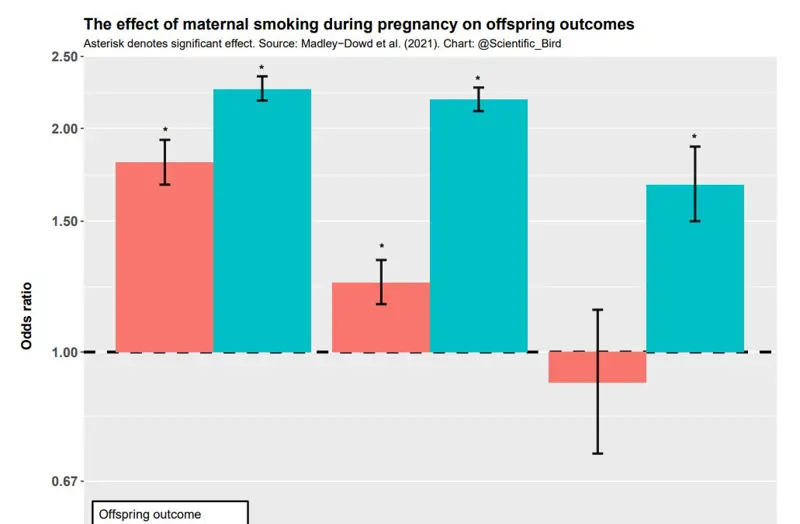
Observational studies retain substantial confounding even after extensive controls. Experiments show naive regressions overstate peer effects by 300% despite demographics. Grandparent status effects quadruple with poorer control quality or measurement error. Polygenic scores inadequately control genetic confounding due to massive measurement error. Harvard admissions discriminate: blacks with mediocre academics admitted over top-decile whites and Asians. Controlling academics widens Harvard racial admission gaps, proving discrimination too large for residual confounders. Criminal sentencing disparities 88% explained by legal confounders, remainder plausibly residual bias. Gender wage gap shrinks to 1% after controls, fully explainable by residual confounding. Maternal smoking causally reduces birth weight but not IQ, ADHD, or intellectual disability after sibling controls. Genetics confound social status transmission beyond parental SES via cognitive ability. Omitted variables and measurement error make causal inference from regressions unreliable. Quasi-experimental designs needed to handle unmeasured confounding. Residuals after controls rarely prove discrimination except implausibly large cases like Harvard. Controlling mediators like occupation biases discrimination estimates downward. Swedish registry data shows parental cognition confounds grandparent effects. Digital ad effects vanish in experiments versus observational regressions. Class size effects mismatched between propensity matching and experiments. Health plan performance biased by non-random selection despite adjustments.
Comments
Be the first to comment!