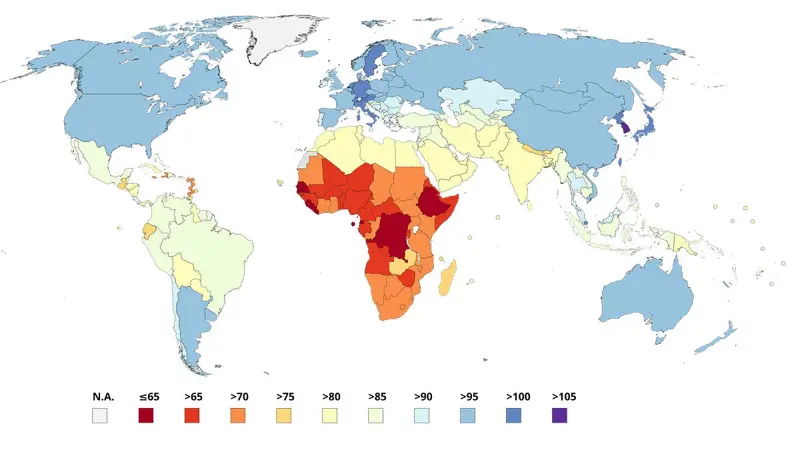
Jensen-Kirkegaard 2024 is S-tier best due to error-averaging across datasets and superior coverage. Rindermann 2018 is A-tier for correcting sampling biases and using regional scholastic data in Africa and Latin America. Harmonized learning outcomes is A-tier with good methodology, coverage, and accurate large countries like China and India. Lynn 2002 is B-tier solid for its era despite unnecessary geographic imputations. Becker new version is B-tier believable in rank order and differences. Basic Skills Dataset is B-tier superior methodology but less coverage. Henss is B-tier composite but errs by including geographic imputations flattening low-end averages. Lynn 2012 improves coverage to 133 studies but lags without later scholastic data. World Bank test scores is C-tier flawed by odd winsorization exaggerating low-end gaps and deflating high-end. Becker old version is C-tier implausible lows like Nepal's 43 and uses imputations. Human Capital Index is D-tier unstandardized and contaminated by health-education proxies. Sub-Saharan Africa averages lowest across top datasets. Rindermann underestimates most East Asian IQs except China. Harmonized outcomes shows Bangladesh below 70 and Western/Central Africa too low. Morocco surprises as low for stable African nation. Ethiopia below Kenya and Sudan despite imperial history. Africa shows west-east IQ axis possibly from Bantu expansion or colonization differences. Pakistan bafflingly low versus Afghanistan and Saudi Arabia despite cousin marriage. Somalia could rise most with stabilization.
Comments
Be the first to comment!