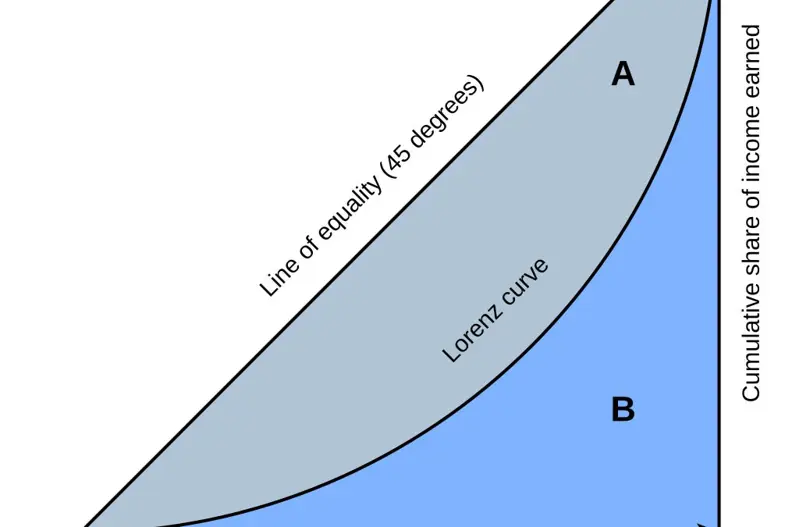
Gini coefficient masks true inequality by being scale-invariant. Standard deviation reveals massive absolute income spreads in richer societies. US men income std dev hit $75,836 in 2013 vs $1,027 in 1940 nominally. Inflation-adjusted std dev rose 4x matching mean income growth from $15,622 to $63,344. Women's Gini dropped due to workforce entry but absolute measures differ. Historical societies grew richer and more unequal from Neolithic to modern eras. Pre-industrial Gini ranged 0.1-0.7 but absolute inequality scaled with wealth. Post-1820 world GDP per capita jumped from $1,500 to $20,000 boosting absolute inequality 10x. Gini stayed stagnant globally despite welfare states. Inequality serves status games in modern abundance where basics are cheap. Money's main modern uses are status, living standards, pleasure, freedom. Inequality does not cause revolts – sudden welfare drops do. Developed societies store wealth better than hunter-gatherers or early farmers. Bronze Age had coins but no banks limiting inequality scale.
Comments
Be the first to comment!