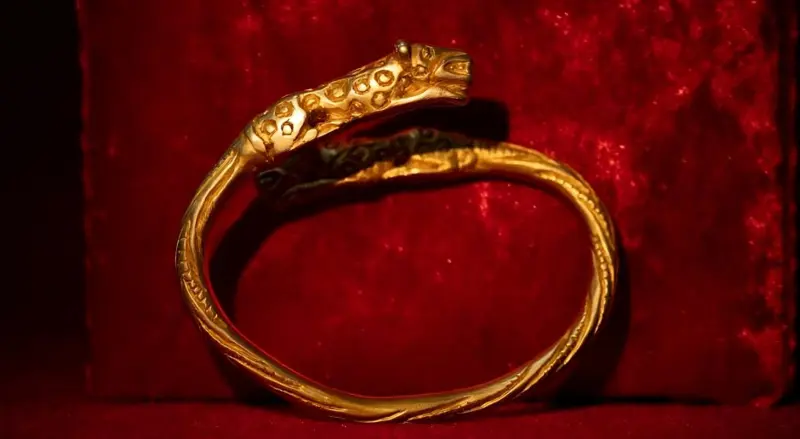
Archaeologists excavated three kurhans near Karabau yielding over 1,000 Sarmatian artifacts. Finds include gold jewelry, iron and bronze weapons, ceramics. Karabau-2 kurhan held nine graves, seven intact. Graves belonged to Sarmatian aristocracy. Spectacular 370g gold bracelet features mountain leopards and 100+ animalistic ornaments. Art depicts leopards, boars, tigers signaling rich nomadic symbolism. Silver pictograms show saiga antelope and wolf. Karakuduk-1 and -2 kurhans each had 10-15 graves with jewelry, daily items, weapons. Sarmatians practiced Tengriism, buried with personal weapons and ornaments. Sarmatians were Indo-European nomads roaming Eastern Europe and Central Asia steps from 4th BCE to 4th CE. Eventually assimilated by Slavs but left craft and art legacy. Region holds ~500 undiscovered Sarmatian kurhans.
Comments
Be the first to comment!