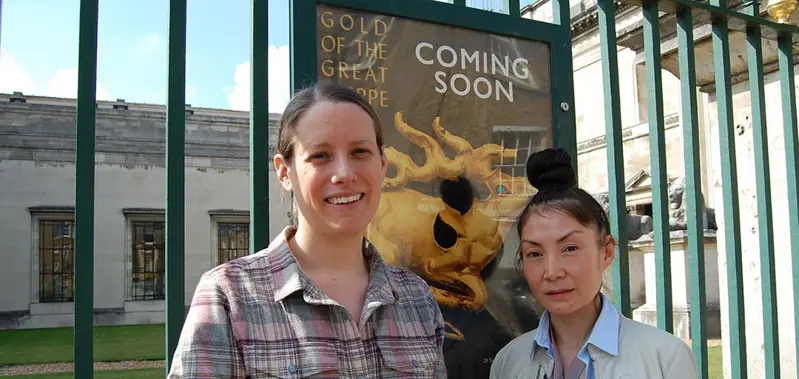
Archaeologists excavated undisturbed Kurgan 4 containing teenage archer's gold treasures. Archer buried with 2000 gold microbeads sewn on shoes for status display. Gold artifacts depict deer, sheep, wolves, cats, griffins in stylized animal art. Saka built complex burials with wooden coffins in log cabins under earthen mounds. Nomads mastered steppe via mobility, crops, animal raising despite weather extremes. Saka goldworking from 9th century BC outpaced British Isles by centuries. Region rich in copper, gold, rare tin fueled early metal exports. Women buried with prestige objects held high status in hierarchical society. Genetically verified archer and sister remains confirm family burial. Kazakh researcher recognizes Saka culture as ancestral DNA heritage. Gold objects custom-made for archer differ from later commemorative hoard. Organic materials like leather arrows preserved by freeze-drying climate. Saka traditions persist in modern Kazakh funerary rituals. Incursions forced some Saka south into India with genetic mixing. Newcomers adopted Saka horse burials showing ritual longevity. Saka not barbarians but landscape masters with ordered nature connection. Exhibition displays archer's burial layout minus remains. Bone weaving tablet only item left in looted girl's grave. Saka among earliest bronze makers in Great Steppe.
Comments
Be the first to comment!