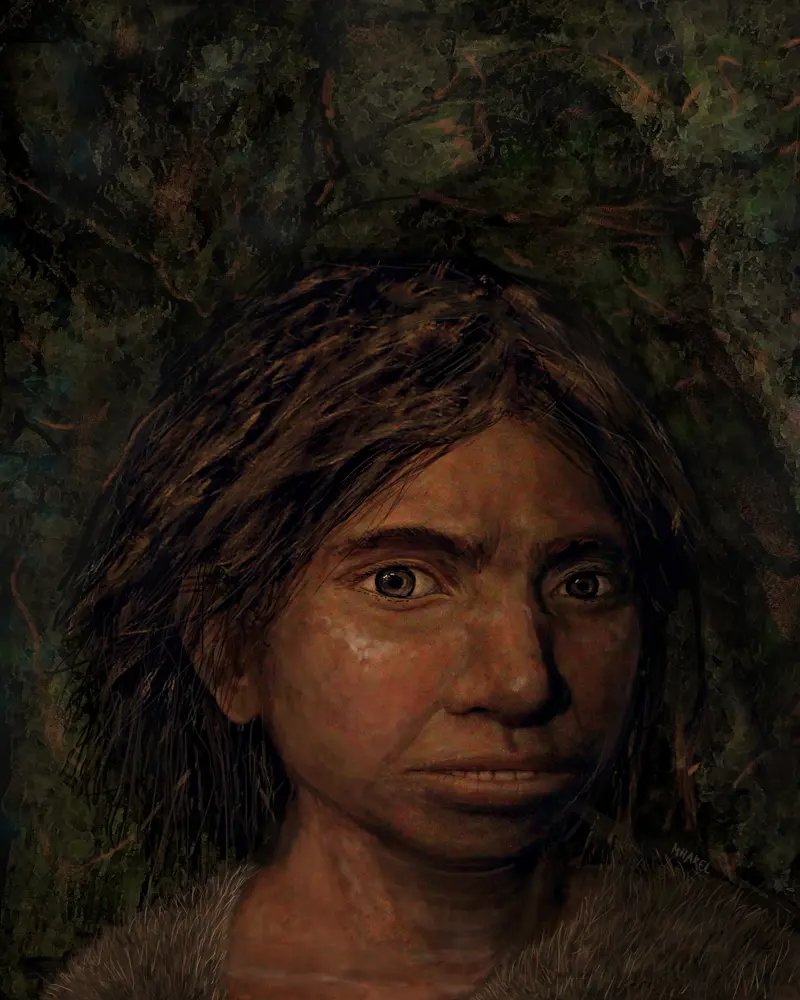
Researchers reconstructed Denisovan skeletal anatomy from ancient DNA methylation patterns. Denisovans resembled Neanderthals in sloping forehead, long face, and large pelvis. Denisovans had wider skulls than modern humans or Neanderthals. Denisovans featured longer dental arches and lacked chins. 56 anatomical features differ between Denisovans, modern humans, and Neanderthals, with 34 in the skull. Method accurately predicted 85% of Neanderthal and chimpanzee trait divergences. Prediction matched newly discovered Denisovan jawbone perfectly. Up to 6% Denisovan DNA persists in Melanesians and Aboriginal Australians. Denisovan DNA aids Tibetans' high-altitude adaptation. Denisovan DNA enhances Inuits' cold tolerance. Denisovans lived in Siberia and Eastern Asia until 50,000 years ago. Modern humans separated by unique traits from extinct Denisovans and Neanderthals.
Comments
Be the first to comment!