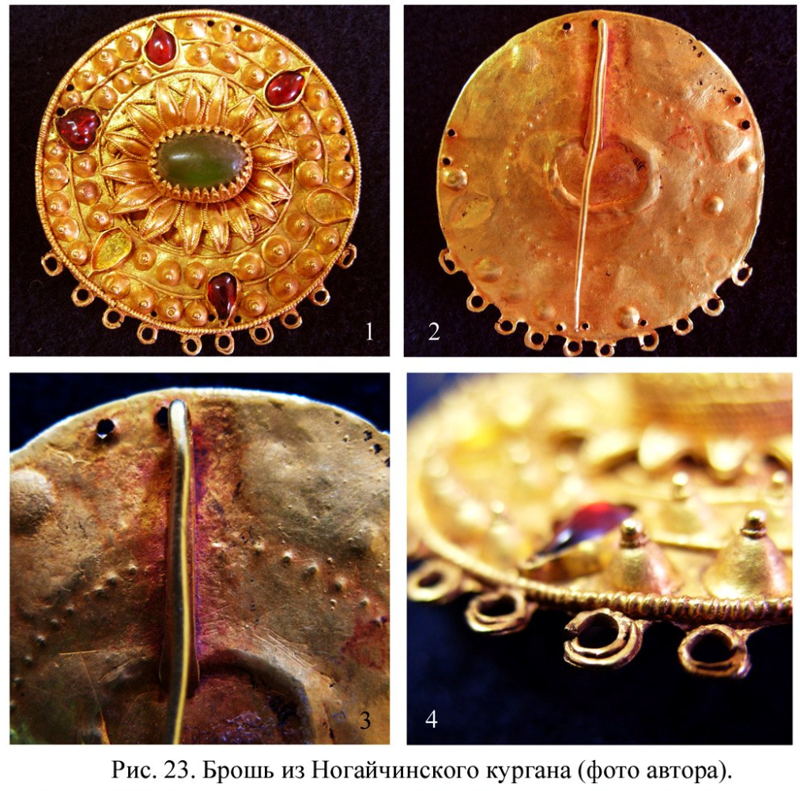
Psenafa fibula-brooch from Maikop Adygea dated 3rd-2nd BCE has animal figurines, chalcedony insert, crescents, sun disks. Uses filigree and granulation techniques from Colchis school. Shows parallels in South-North Caucasus brooches. Exhibits deliberate ritual damage. Tenginsky burial woman under 30 from upper Meotian strata buried with horse like warriors. Her dress embroidered gold on shoulders and hem. Head covered by scarf fastened with large brooch-clip pendants. Chest had carnelian gems depicting Apollo and Eros. Nogaichik Crimea brooch 1st BCE-1st CE uses gold, garnets, green glass paste. Pontic Sarmatian fibula 2nd half 2nd BCE from Kuban features granulated disc, chains, heart-shaped plates. Tenginskaya necropolis parallels confirm rare type exclusive to region. Gold disc brooch 2nd-1st BCE has bosses, filigree scrolls, trichinopoly chains, disc finials. Greek flower brooch 5th-3rd BCE has filigree petals, dome, discoid dangles. Novo-Vochepshiy brooch from North Caucasus aul matches regional elite patterns.
Comments
Be the first to comment!