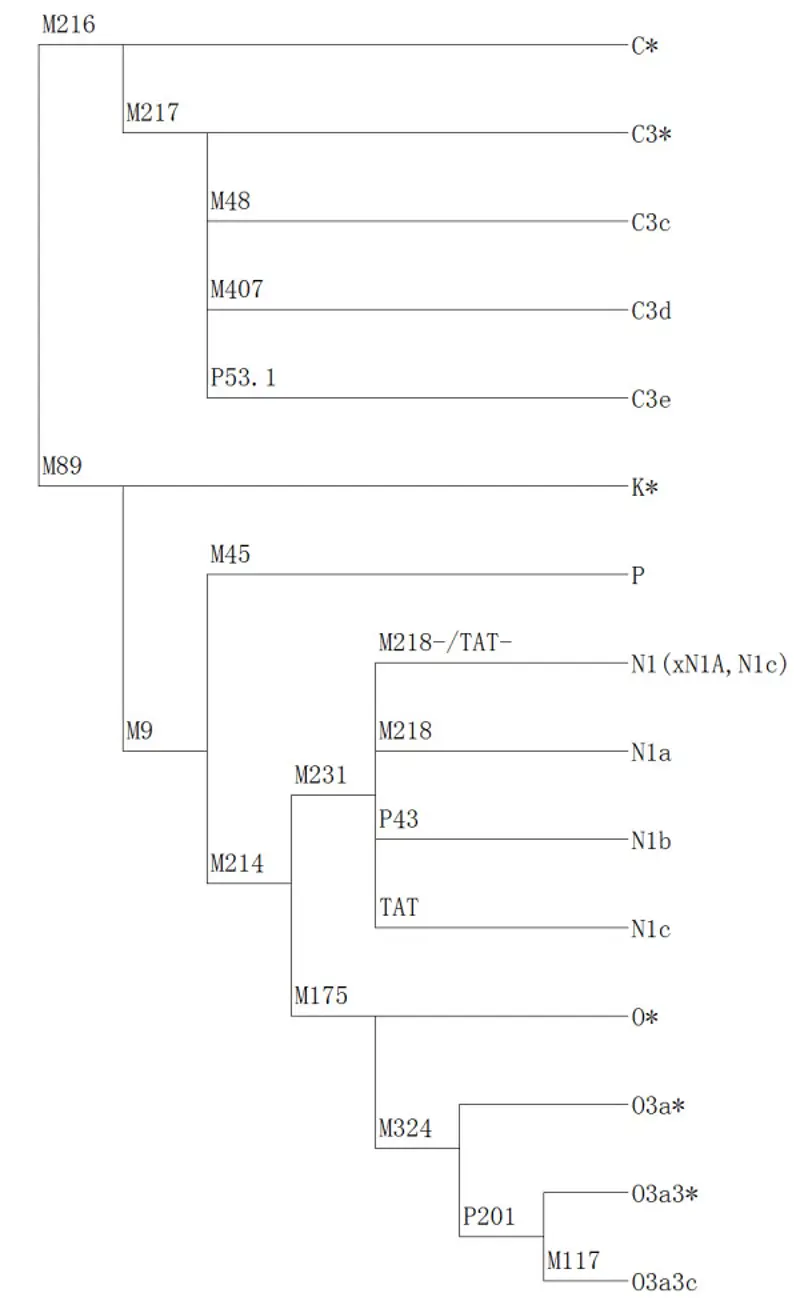
Prehistoric West Liao populations dominated by N1 haplogroup at 71% in earliest sites. N1 frequency at 63% overall but declined from 89% Neolithic to lower Bronze Age. O3a haplogroup appeared from Yellow River farming immigrants in Lower Xiajiadian. C3e haplogroup entered from northern steppe nomads in Upper Xiajiadian and Jinggouzi. N1c subtype from northern Eurasia appeared in Upper Xiajiadian Dashaqian. Ancient West Liao genetically distinct from Yellow River O3-dominant populations. Miaozigou Yellow River site carried N1 like West Liao, suggesting Hongshan expansion. Jinggouzi nomads all C3e, closely related paternally. Upper Xiajiadian retained original N1 but added O3 subtypes, N1c, C3e. No population replacement occurred over 5000 years. Lineage diversity increased from immigrant influx. Modern West Liao dominated by O3-M175 at 58.8%, N1 now 8.5%. Ancient N1 haplotypes now rare, persist in northern minorities like Mongolians, Manchu. C3e rare today, high in Xibe descendants of Northeast nomads. Cultural shifts from hunting to farming to nomadism tied to Yellow River and steppe immigration.
Comments
Be the first to comment!