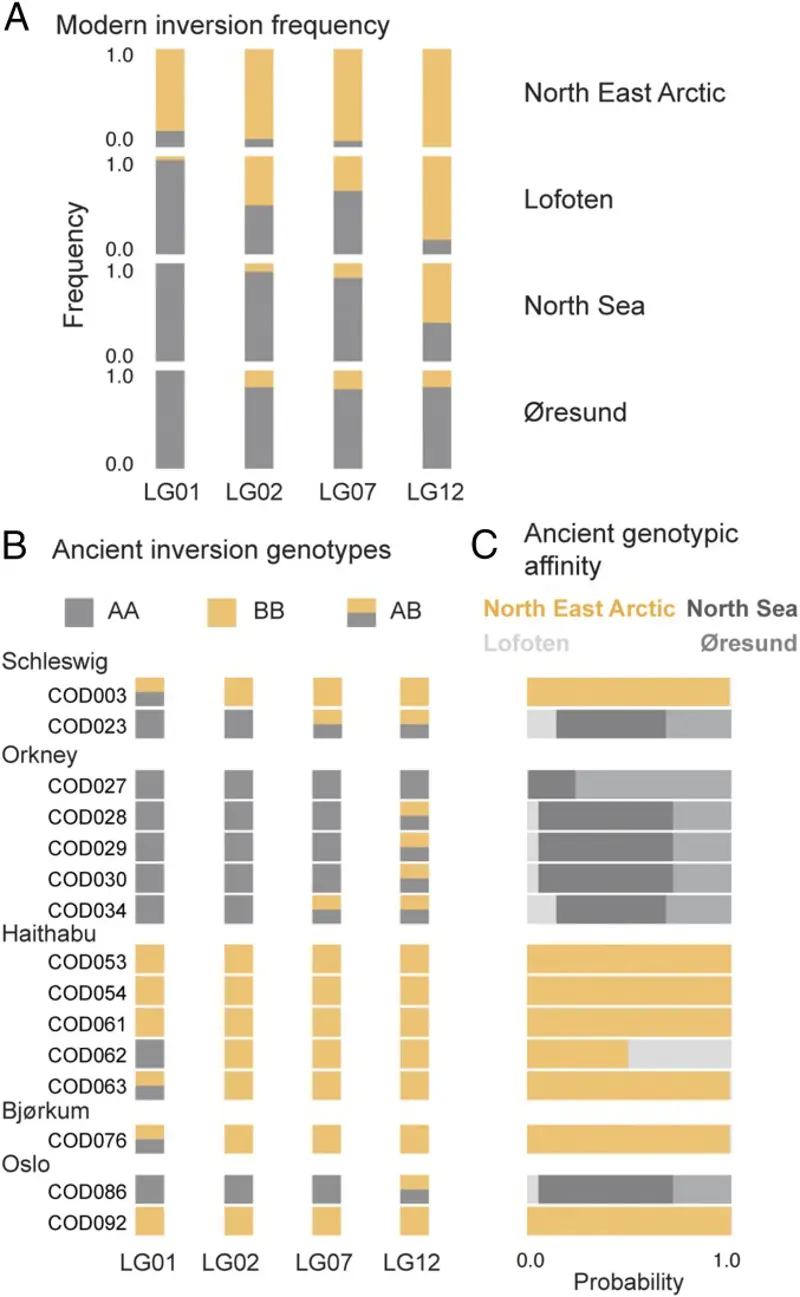
Ancient fish bones yield 15-46% endogenous DNA for whole-genome sequencing. Viking Age Haithabu cod match North East Arctic cod via genome-wide SNPs and inversions. Haithabu cod show >99% probability of NEA origin based on inversion genotypes. NEA cod fixed for inverted alleles on four chromosomes distinguishing them from other populations. Orkney medieval cod match local North Sea population. Bjørkum cod from western Norway match NEA. Oslo and Schleswig cod show mixed NEA and local ancestry. Trade supplied dried cod from Lofoten spawning grounds to Baltic urban centers 800-1066 CE. Isotope data confirmed non-local origin now genetically verified. Chromosomal inversions stable over 1200 years indicating balanced polymorphism. Fish bones preserve DNA better than expected despite porosity. Genome analyses exclude local Baltic or Kattegat sources for Haithabu cod. NEA cod migrate from Barents Sea to Lofoten for spawning. Long-distance transport predates historical records by centuries. Genomic method resolves archaeological debate on early cod exports.
Comments
Be the first to comment!