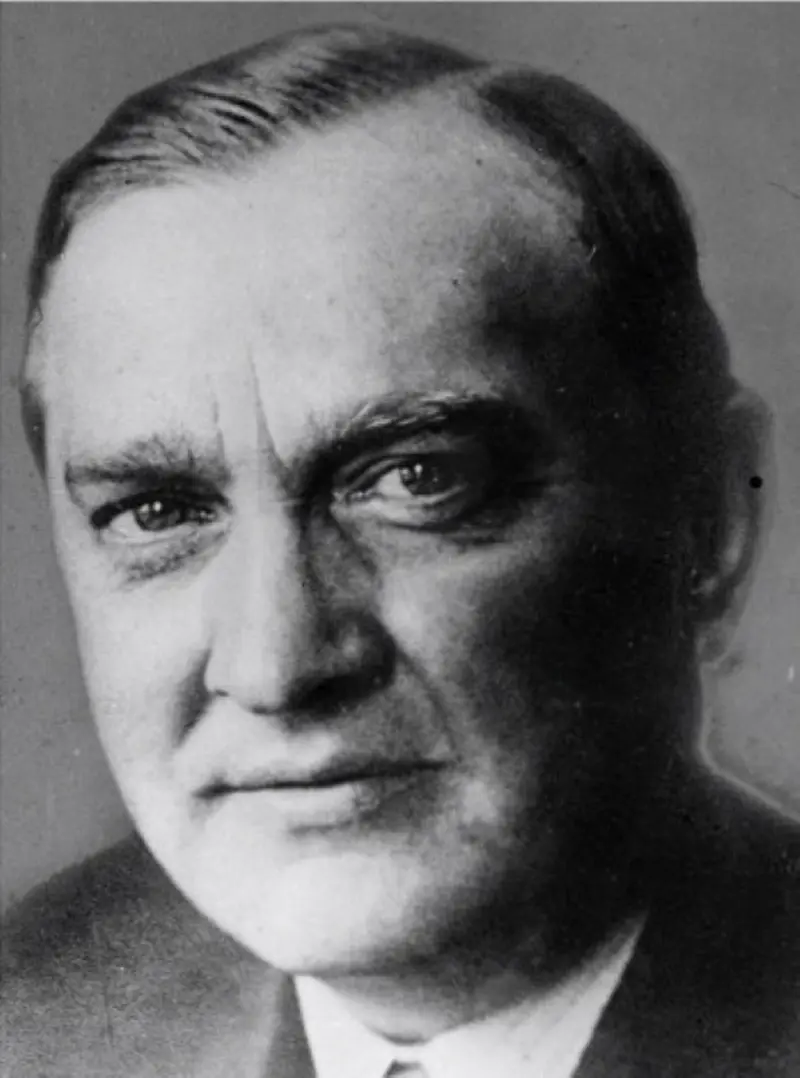
Origins and vision of the school: The formation of the Lviv school of mathematics was the realization of the concept of Zygmunt Janiszewski, who advocated the concentration of Polish scholars on selected modern fields (multiplicity theory, topology, logic) and teamwork. The foundation of the school became a chance meeting between Hugo Steinhaus and the brilliant self-taught Stefan Banach in 1916. Stefan Banach and functional analysis: Banach was the school's most prominent figure and the creator of functional analysis, which began with his innovative 1920 doctoral dissertation. Although he was a genius, he disregarded formalities and documenting discoveries; he earned his doctorate thanks to the foray of his colleagues, who wrote down his thoughts and organized an exam without his full knowledge. The Scottish Café and the Scottish Book: scientific life took place not within the walls of the university, but in Lviv's cafes, mainly in the "Scottish". Mathematicians held discussions there for hours, writing down problems in pencil on the marble tops of the tables, and from 1935 in a thick notebook called the Scottish Book. Original prizes, such as a live goose, caviar or cognac, were funded for solving the tasks. Steinhaus' practical applications: Unlike many theorists, Hugo Steinhaus was passionate about the practical application of mathematics. Among other things, he developed a grid for measuring the lengths of rivers on maps, mathematical rules for the fair division of a cake, and published the popular Mathematical Kaleidoscope. The tragedy of World War II: The Soviet and German occupation put an end to the school's greatness. Some scientists, such as Stanislaw Ulam and Marek Kac, managed to immigrate to the US. Others fell victim to the Holocaust (e.g., Stanislaw Saks) or had to work as lice feeders at the Weigl Institute to avoid deportation to labor (including Banach himself). Postwar fate: After the war and Banach's death in 1945, the surviving mathematicians (Steinhaus, Mazur, Orlicz) continued their work at universities in the new Poland. Stanislaw Ulam made key contributions to the US atomic bomb project at Los Alamos.
Comments
Be the first to comment!