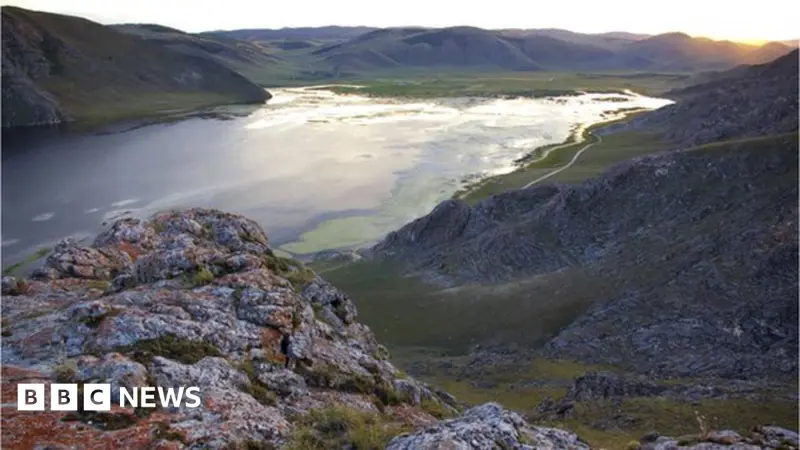
The most puzzling part of the discovery was that the boy showed no clear affinities to East Asian populations such as Chinese, Koreans or Japanese. Today's Native Americans are most closely related to East Asian populations, so the researchers had to determine how the Mal'ty boy could be related to Native Americans, but not to East Asian populations. The scientists mapped the genome of a four-year-old boy who died in south-central Siberia 24,000 years ago. "When we sequenced this genome, something strange emerged," he explained. "Parts of the genome that are found today in Westerners, other parts of the genome that are found today in Native Americans - and that are unique to Native Americans today." DNA from the boy's Y chromosome and mitochondria (cell batteries) was of the same type as DNA found today in a region that includes Europe, West and South Asia and North Africa, but rare or absent in Central Asia, East Asia and the Americas. Scientists estimate that 14-38% of Native American ancestors descended from a population similar to the one that lived in Malta 24,000 years ago.
Comments
Be the first to comment!