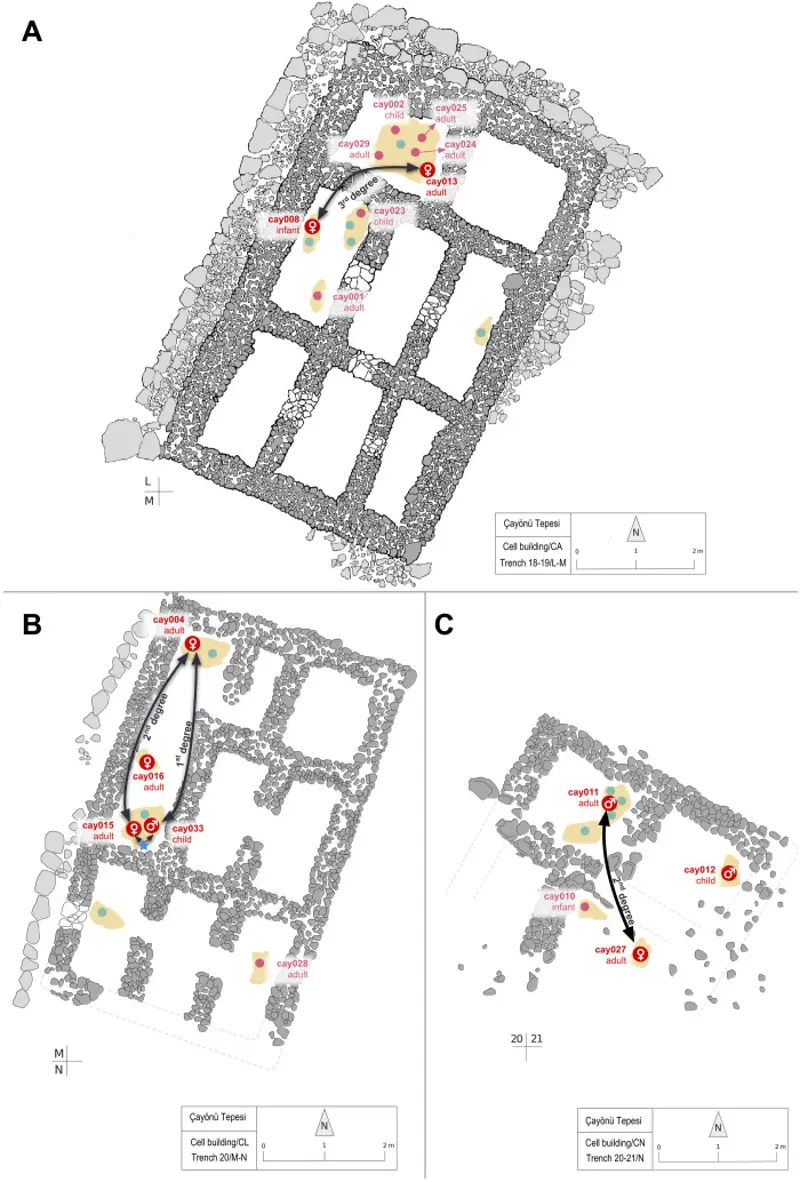
Remember: genetic diversity = modern mixing of the man from Warsaw with the one from Zakopane. These were exclusively white people! Many evidences indicate that the first farmers of Europe were closely related to the Neolithic communities of the Middle East. First, analyses of ancient DNA clearly show the demic nature of the Neolithic expansion - agriculture spread to Europe with the migration of people from Anatolia. The genomes of early European farmers are almost entirely derived from Anatolian populations, as manifested by the dominant Middle Eastern ancestral component in their genetic profile. Comparative studies confirm this affinity: neolithic farmers from Europe cluster genetically close to Anatolian samples, clearly distinguishing themselves from the European hunter-gatherers of the time. For example, the first agricultural populations from many regions of Europe turn out to be direct descendants of Neolithic groups from the Aegean region. Another line of evidence is the ancestral structure. Both Neolithic Anatolians and European farmers share a similar mix of ancestry from the eastern and western parts of the Fertile Crescent. As a result, the genetic pool of the first European farmers contains the same key Anatolian-Blissan component inherited from Middle Eastern populations. Moreover, with the advent of the Neolithic in Europe, the level of intrinsic genetic variability in the population increased - it was higher than in earlier Mesolithic communities. This change is explained by the influx of new genes and the mixing of populations during the agricultural colonization of the continent. In conclusion, the close genetic affinity between the first farmers of Europe and the societies of Neolithic Anatolia proves that the Neolithic in Europe spread mainly through the migration of people from the Fertile Crescent areas, who brought with them both a new economic model and their own genetic pool. A study of the genomes of 13 individuals from the Neolithic site of Çayönü (Upper Mesopotamia, ca. 8500-7500 BC) has revealed dynamic demographic and cultural processes in the early Neolithic period. The Çayönü population turned out to be very genetically diverse and of mixed ancestry - it carried admixture from both the western and eastern parts of the Fertile Crescent. Statistical analyses (qpAdm) showed that the genomes from Çayönü can be modeled as a combination of three ancestral components: predominantly Anatolian (central Anatolia), supplemented by ~33% by a component related to populations from the eastern Fertile Crescent (Zagros) and ~19% by a component from the southern Levant. This means that the community was the recipient of genetic influences from different regions and probably had extensive inter-regional contacts as early as the Early Neolithic. Çayönü's high level of genetic diversity distinguished it from earlier hunter-gatherer groups and early Neolithic populations of Anatolia. Diversity indices (e.g., the f3 statistic) indicate that genetic variability within this community was higher than in Central Anatolian Pre-Ceramic Neolithic (PPN) populations and than in prehistoric hunter-gatherers of Europe. Such high heterogeneity is comparable to later Anatolian and European hunter-gatherer populations, suggesting a greater abundance or influx of diverse ancestry into Çayönü. The lack of significant changes in genetic composition over the ~1000 years of settlement (except in one case described below) attests to the overall biological continuity of the community. At the same time, the presence of genetic outliers indicates episodes of immigration: one individual (cay008) with an unusual DNA profile was identified - about half of his genes were of ancestry related to populations from the Zagros, with no Levantine component present in the rest of the residents. This "foreign" genome is indicative of an influx of people from outside the local gene pool, confirming the existence of migration to Çayönü in the Early Neolithic. Kinship analysis showed that the Çayönü community was organized along familial biological lines. Several pairs of related individuals (a total of four pairs of close relatives to the third degree) were found buried together or nearby in the sample. This suggests that immediate family members were buried together, so nuclear and multi-generational families played an important role in the social structure of this settlement. This result agrees with observations from other early Neolithic sites in Anatolia, where frequent co-occurrence of relatives within graves has also been reported (e.g., Aşıklı Höyük, Boncuklu), in contrast to later communities such as Çatalhöyük, where kin burials were less frequent. In addition to genetic data, anthropological findings from Çayönü indicate the high cultural ingenuity of this community. Deliberate body modifications - including artificial skull deformation (head shape modeling) and traces of a bone-burning procedure (cauterization) on a child's skull - were observed in some of the individuals studied. These medical-ritual interventions represent the earliest documented examples of such practices in the region and testify to developed knowledge and complex customs. The widespread use of skull molding and the presence of surgical procedures such as trepanation and cauterization suggest the existence of a distinct culture of intentional body modification in Çayönü. This provides evidence of the cultural innovation of this population, manifested in symbolic and probably medical practices. The findings also have important implications for understanding the connections between Upper Mesopotamia and other regions of Neolithic West Asia. It was found that genetic influences from the east later permeated the Neolithic population of Anatolia, and Upper Mesopotamia (Çayönü region) was likely the main source of this "eastern" genetic component observed in Anatolia. In other words, migrations from the Mesopotamian area to Anatolia during the Neolithic period led to the mixing of populations there with carriers of eastern ancestry (related to the Zagros groups, among others). Archaeological evidence - shared cultural elements and technologies (such as building styles, stone wares and obsidian distribution networks) - also points to close contacts between Upper Mesopotamia and Anatolia during the Neolithic transition. Taken together, these data suggest that Upper Mesopotamia acted as a demographic and cultural hub, linking the various communities of the Fertile Crescent. Its innovation in symbolism, technology and economy may have been due not only to its abundant natural environment, but also to intense intergroup ties that fostered the exchange of people, ideas and genes.
Comments
Be the first to comment!