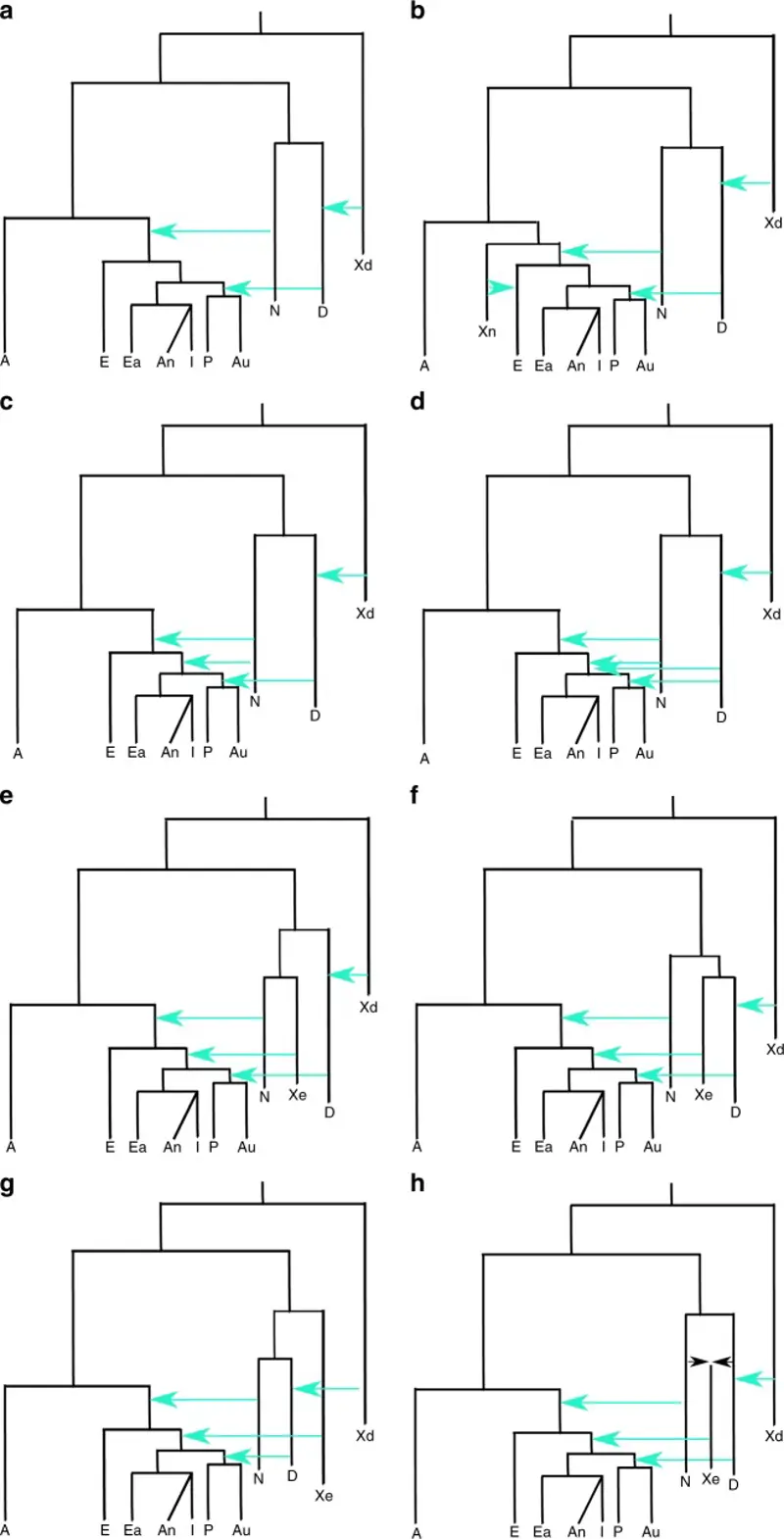
No mixing of Europeans with Denisovans. The results of the study clearly indicate that European Neolithic farmers (nor their Anatolian ancestors) had no Denisovan admixture. D-statistical analyses (e.g., D(Test, Mbuti: Denisovan, Chimp)) showed the absence of a Denisovan signal in samples from Anatolia, Iran, Armenia and Europe. On the contrary, traces of this archaic component were found only in East Asian and Australian and Papuan populations. This is confirmed by earlier studies, according to which Denisovan admixture is found almost exclusively in East Asian, Oceania and some South Asian groups. Denisovans mainly inhabited Central and East Asia, and their contact with Homo sapiens occurred after the separation of the eastern and western lines of humanity. Human migrations to Europe took different routes, with no contact with the Denisovans. The study, published in Nature Communications (2018), analyzed 15 ancient genomes from the Neolithic and Bronze Age periods from present-day Iran, Armenia and Turkey. The goal was to understand genetic dynamics in West Asia after the transition to an agricultural economy and the region's role in the neolithization of Europe. The results indicate that the genetic diversity of West Asia's populations was shaped as early as the Early Neolithic, and that regional populations remained relatively isolated for thousands of years, retaining their specific ancestral profiles. In Western Anatolia, relative genetic continuity was found from the Neolithic period to the Bronze Age. In Iran and the Caucasus, on the other hand, changes appeared indicating gene flow from steppe and Eastern European populations. The study shows that the ancestors of European farmers originated in western Anatolia and did not contain significant admixtures from eastern populations (e.g., Iran or the Levant) during the initial phase of migration to Europe. It was also shown that although these populations shared a similar life model (agriculture), their genetic origins were different. PCA, ADMIXTURE analyses and f-statistics tests confirmed that the early agricultural populations of Europe shared common roots with Western Anatolian Neolithic groups, not with other regions of the Middle East. At the same time, it was found that the populations of Iran, Armenia and the Caucasus were characterized by a distinctly separate genetic component (the so-called Iran Neolithic or CHG), which only spread westward to a limited extent. The study underscores the complexity and spatial structure of West Asian populations in the Neolithic era, as well as the importance of local geographic and cultural factors in shaping genetic differences. Genetic proximity of modern Europeans and Neolithic Middle Eastern populations Modern Europeans inherited much of their DNA from Neolithic farmers from Anatolia, who began migrating to Europe about 8,000 years ago. This is demonstrated by: PCA analyses showing that the ancient genomes of farmers from western Anatolia (Barcin) are the closest ancestors of Neolithic Europeans. F3 and D statistics confirming significant relatedness between these groups. ADMIXTURE models that the genetic component of Anatolian farmers predominates among European Neolithic farmers, and is still present today in the DNA of modern Europeans, especially southern Europeans. The study shows that migrations from Anatolia to Europe were demic in nature, i.e., they involved the movement of people, not just ideas. Early agricultural populations of Europe, such as those of the Balkans, Hungary and Germany, show high genetic similarity to Anatolian groups. Modern Europeans have retained some of this heritage, despite later admixtures (e.g., from steppe peoples or Mesolithic hunter-gatherers).
Comments
Be the first to comment!