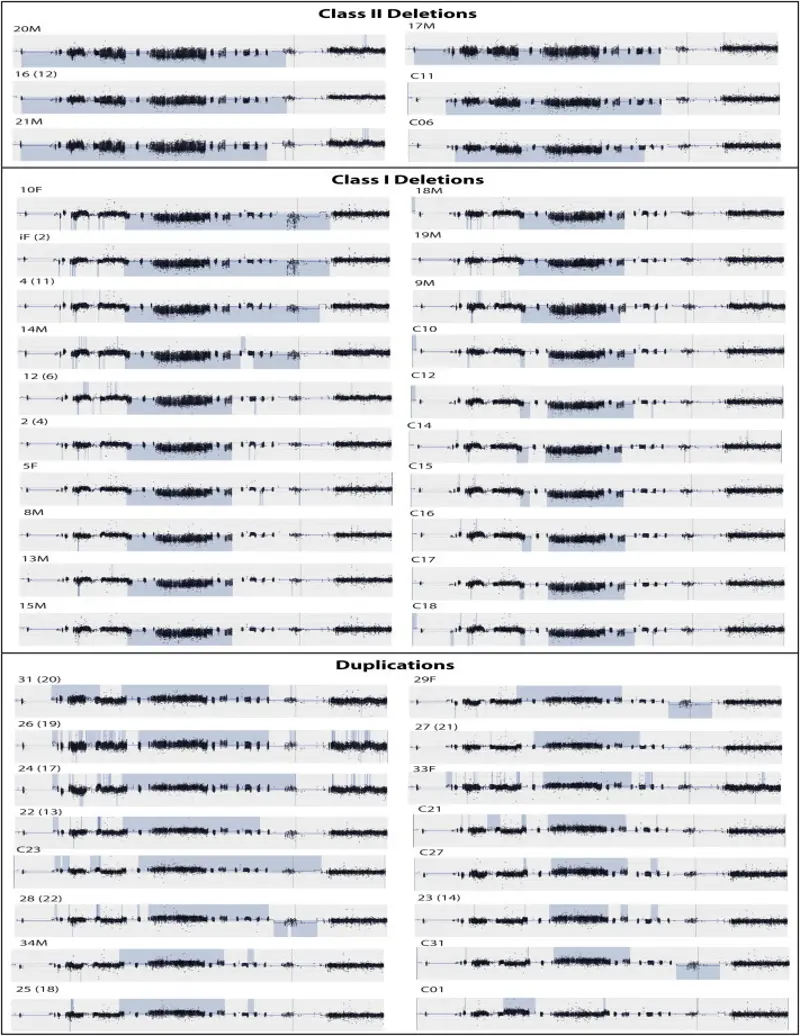
Europeans have more copies of DUF1220, especially the CON1 and HLS domains, which may be associated with greater brain volume and cognitive function. The DUF1220 gene (also known as NBPF - Neuroblastoma Breakpoint Family) has an unusually high copy number in the human genome. Differences in its number and subtypes between populations are important, especially in the context of brain size, cognitive function and neurological diseases. The most important differences between European and sub-Saharan populations relate to the number and copy distribution of DUF1220 domains, especially the CON1, CON2 and HLS1-3 classes. Sources: Population data from the Human Genome Diversity Project (HGDP), 1000 Genomes, and studies: Dumas et al. 2012, Zimmer & Sikela 2014, Keeney et al. 2015, Kouprina et al. 2020. In summary, the study provides evidence that DUF1220 is a key regulator of brain size in humans - its rapid growth in the human lineage may be crucial in the evolution of the human brain, but at the same time increases the risk of pathologies associated with genome instability in the 1q21 region. The authors postulate that DUF1220 domains affect centrosomal function and the neuronal cell cycle, potentially by influencing the mechanisms of symmetric and asymmetric division, which directly affects the number of neurons and brain size. For example, PDE4DIP (containing the ancestor DUF1220) and other centrosomal genes associated with microcephaly support this hypothesis. Analyses suggest that DUF1220 may be a major contributor to brain size variation in human populations and over the course of evolution. The presence of a large number of tandemly duplicated DUF1220 sequences and their distribution within NBPF genes promote genetic instability of the 1q21 region, which may lead to deletions and duplications involving neighboring genes as well. These phenomena may explain the association of this region with numerous diseases, including autism, epilepsy, schizophrenia and birth defects. The study analyzes the effect of the copy number of DUF1220 domains on human brain size, both in the context of pathology (microcephaly and macrocephaly) and evolutionary and normal variation. DUF1220 domains show the largest human lineage-specific increase in copy number of any protein-coding region in the human genome, particularly in the 1q21 region, which is known for its high genetic instability and association with numerous diseases. The study analyzed 42 individuals with microcephaly and macrocephaly and 59 healthy individuals with extremely large or small gray matter volume. We used proprietary CGH microarrays including DUF1220 sequences and precision bioinformatics tools to assess copy number. The results showed that DUF1220 copy number was strongly correlated with brain size measured as Z-score of cranial circumference (FOC) and gray matter volume. The strongest association was for the conservative DUF1220 clades: CON1 (p = 0.0079), CON2 (p = 0.0134), CON3 (p = 0.0116). All analyzed NBPF genes encoding DUF1220 in the 1q21 region showed a significant correlation with brain size in individuals with deletions. In the healthy population, higher copy number of CON1 and CON2 clades significantly correlated with larger gray matter volume (p = 0.0246 and 0.0334). Other genes of the 1q21 region did not show such correlations. Also, a comparison with other mammals indicates that humans have the highest DUF1220 copy number (272), which correlates with a larger number of cortical neurons (R² = 0.98: p < 0.001).
Comments
Be the first to comment!