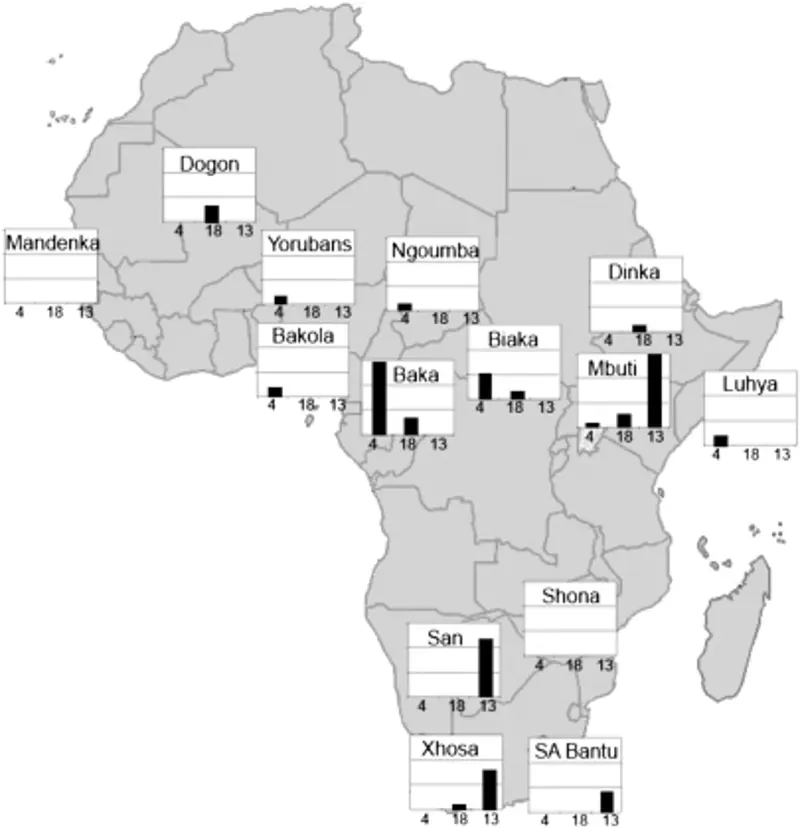
A study by Hammer et al (2011) provided evidence of archaic gene mixing in sub-Saharan populations. The authors analyzed the sequences of 61 non-coding autosomal regions in three African populations (Biak Pygmies, San and Mandenka farmers). The results indicate that about 2% of the genome of modern Africans comes from an archaic hominin lineage that separated from the ancestors of modern humans about 0.7-1 million years ago and introduced its DNA into the gene pool about 35,000 years ago. Among the regions analyzed, three candidate loci with very deeply separated haplotypes were identified, indicating archaic genesis - named 4qMB179 (chromosome 4), 18qMB60 (chr. 18) and 13qMB107 (chr. 13). A DNA fragment of about 31.4 kb was discovered at the 4qMB179 locus, where Biak Pygmies' haplotypes differ from other Africans by about 0.3%. This archaic variant was most common in Central African Pygmies (averaging about 3.6%), while its frequency was only about 0.8% in West and East African farmer populations. A similar pattern was noted at the 18qMB60 locus - the archaic haplotype reached a maximum of ~1.6% in Pygmies, and about 0.8% in other Africans. The 13qMB107 haplotype, on the other hand, reached the highest frequencies in southern Africa - about 11.9% in San (Xhosa ~6.3%) - and occurred in Mbuti Pygmies (14.8%). Timing analyses suggest that the archaic lineage associated with 4qMB179 separated about 1.25 million years ago, and that its penetration into the Homo sapiens genome occurred about 37,000 years ago.
Comments
Be the first to comment!